Lithuanian Šakotis: The Mystery of the Tree Cake
October 21, 2026
Subtitle: Is Lithuania's Famous Tree Cake Really Lithuanian?
Lead: It looks like a golden tree, is baked over an open fire, and has a history full of mystery. Meet Šakotis, Lithuania's famous tree cake – a dessert that has become much more than a sweet treat.
A Cake That Grows Like a Tree
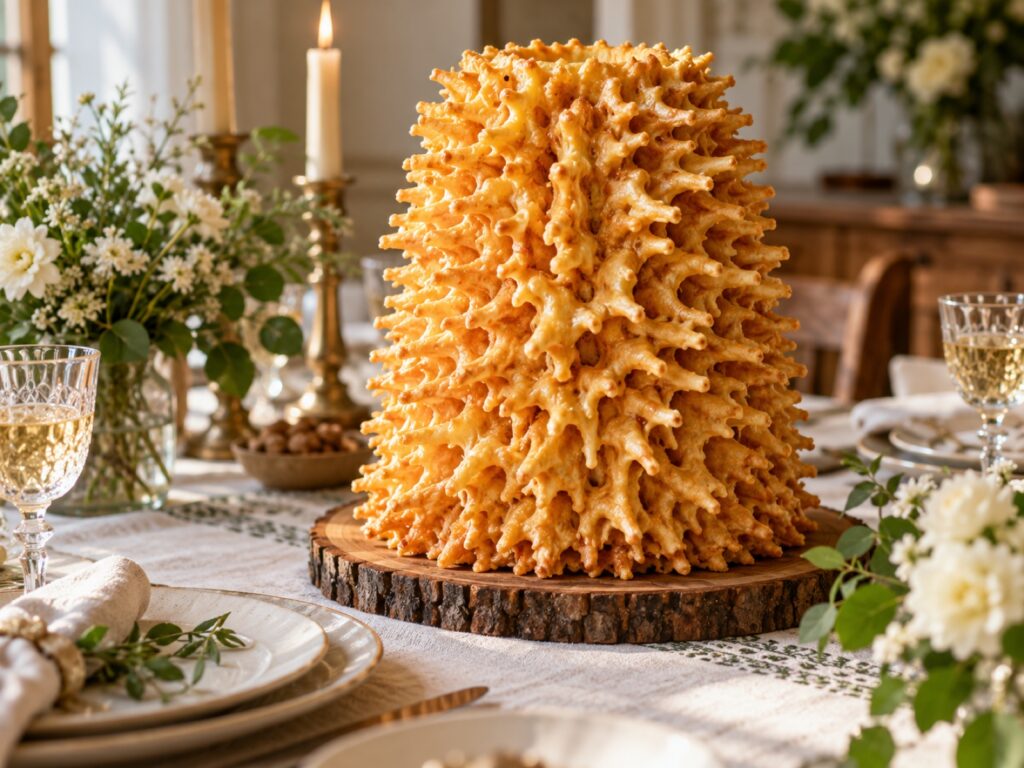
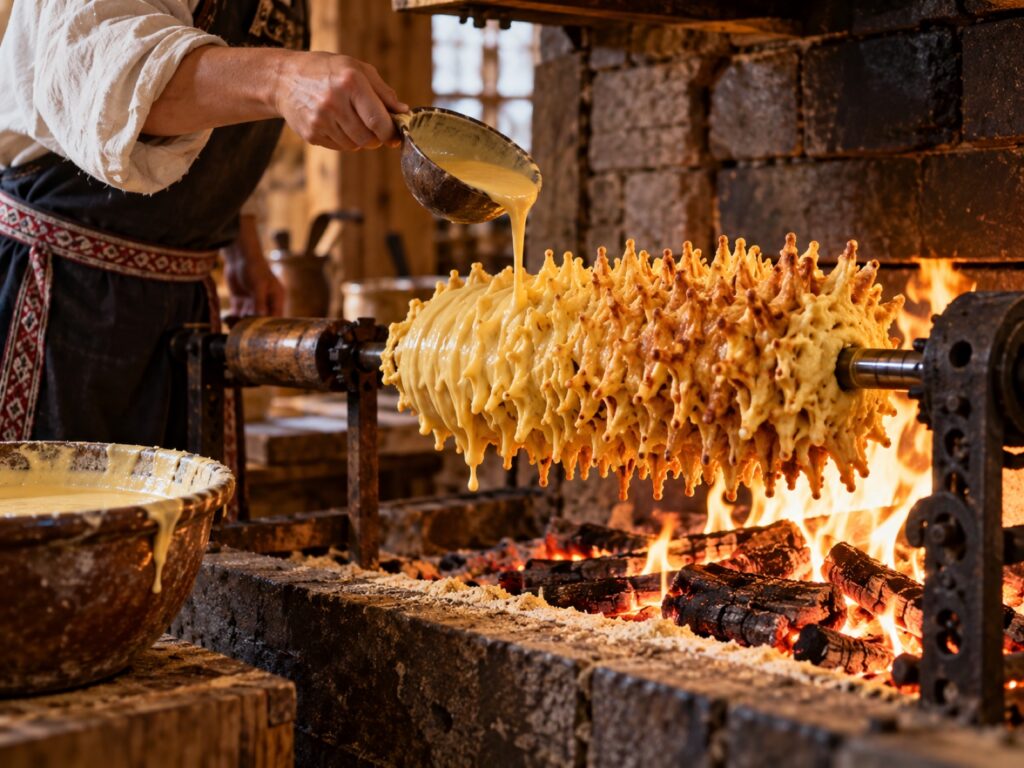
Imagine golden batter slowly dripping onto a rotating spindle above an open fire. Layer by layer, crispy branches begin to form, transforming simple ingredients into something extraordinary.
This is Šakotis, one of Lithuania's most distinctive traditional desserts.
Its name comes from the Lithuanian word šaka, meaning "branch." The cake's unusual shape resembles a tree, while its delicate inner layers look like tree rings.
Made with eggs, butter, flour, sugar, and other traditional ingredients, Šakotis requires patience and skill to prepare. Some large cakes can contain more than 100 eggs!
But the most fascinating part of Šakotis isn't how it's made. It's where it came from.
A Lithuanian Cake with European Roots?
Although Šakotis is a beloved Lithuanian tradition, similar cakes can be found across Europe.
Germany has Baumkuchen, meaning "tree cake," while Poland is known for sękacz, a spiky dessert remarkably similar to Lithuanian Šakotis.
Historical records show that Baumkuchen recipes existed in Germany by the early 19th century, before the documented spread of Šakotis in Lithuania.
So, where did this unusual cake originate? The answer remains uncertain.
For centuries, recipes have traveled across Europe through cultural exchanges, noble households, and skilled bakers. Šakotis may have reached Lithuania through these connections, but its exact journey has never been conclusively established.
A Queen, a Young Baker, and a Romantic Legend
One charming Lithuanian legend connects Šakotis to Barbora Radvilaitė, the famous 16th-century Lithuanian noblewoman who became Queen of Poland.
According to the tale, a young baker named Juozas created an extraordinary cake for a royal baking competition. The queen was so impressed that she offered him a generous reward.
But instead of land or riches, the young man asked for jewellery to give to the woman he loved, hoping to make her feel like a queen on their wedding day.
It's a beautiful story of love and creativity, but it is only a legend, not a historically verified account of how Šakotis was invented.
Still, it adds a little romance to the mystery surrounding Lithuania's beloved tree cake.
How Šakotis Became a Lithuanian Tradition
According to the Universal Lithuanian Encyclopedia, Šakotis began to be baked in Lithuania during the second half of the 19th century, initially in manor houses and rectories.
Over time, the tradition spread beyond these settings and became part of Lithuanian celebrations.
Šakotis earned a special place at weddings, christenings, and family gatherings. Its impressive appearance made it a centrepiece of festive tables.
For many Lithuanians, it became more than a cake – it became a symbol of celebration, family, and shared memories.
And Finally, Some Interesting Facts About Šakotis
- Its name has a special meaning. Šakotis comes from the Lithuanian word šaka, meaning "branch".
- The spikes form naturally. Those golden, crispy branches appear as the batter drips and bakes on a rotating spit.
- It takes a lot of eggs! A large traditional Šakotis may require more than 100 eggs.
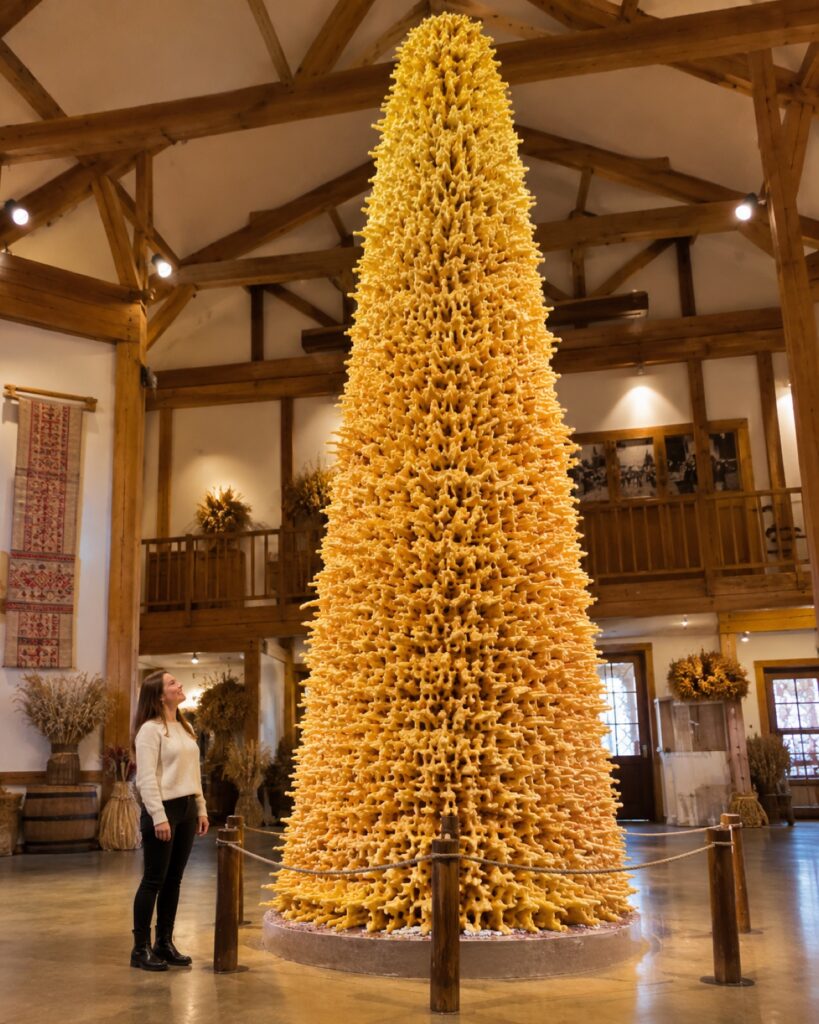
- Lithuania holds a Guinness World Record! In 2015, a giant Šakotis baked in Lithuania stood 3.72 metres tall and weighed 85.8 kg. It took just 2 hours and 20 minutes to bake!
- There is even a Šakotis museum! Near Druskininkai, Lithuania, visitors can discover traditional baking techniques and see a replica of the record-breaking cake.
- It has European recognition. In 2022, Nijolės Šakočienės šakotis received EU Protected Geographical Indication (PGI) status.
CTA
Bring a Taste of Lithuania to Your Coffee Table! Make your next coffee break a little more special with authentic Lithuanian Šakotis. [Explore Our Lithuanian Šakotis Cakes ->]